

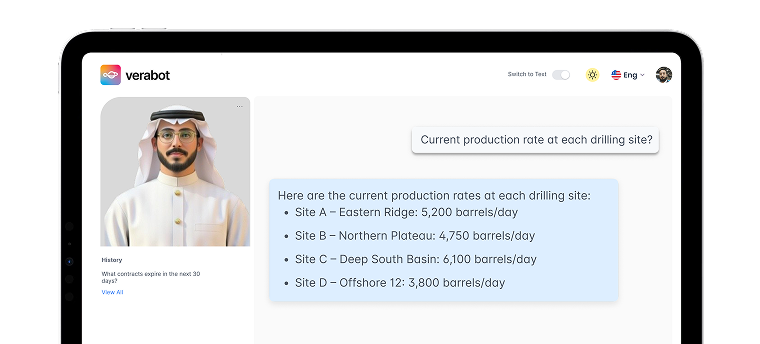
In a rapidly evolving urban landscape, the government entity often struggled with fragmented data sources, inefficiencies in service delivery, and a lack of real-time insights. These challenges hindered their ability to provide seamless services to residents and businesses, while also complicating data governance and compliance efforts.

The Solution We Presented
In response to the organization’s growing need for structured insights, agile governance, and cross-departmental coordination, we outlined a comprehensive Data Management and Analytics Platform tailored to the priorities and operational context of a modern government institution.
The proposed solution was framed to unify disparate data sources and establish a scalable, cloud-native environment capable of supporting real-time and historical decision-making. Our approach focused on providing a centralized view of information assets—bridging silos, improving information flow, and preparing the institution for future demands around digital governance, automation, and transparency.
Key Components of the Proposed Platform:
- Centralized Data Repository
Designed to enable seamless data access across departments, promoting consistency, eliminating redundancy, and ensuring data fidelity for decision-makers at every level. - Advanced Analytics Framework
We recommended the integration of advanced analytics tools to support both historical trend analysis and real-time operational insights—enhancing responsiveness across administrative functions. - Regulatory Intelligence and Automation Support
The platform was designed to include capabilities for machine-readable regulation processing, with the goal of reducing manual compliance efforts and promoting adaptive governance. - Operational Reporting and Business Intelligence Layer
A proposed suite of BI tools would allow the leadership to track performance indicators, optimize resource allocation, and identify intervention opportunities with greater precision. - Cloud-Native and Modular Architecture
To ensure adaptability, we proposed a flexible system architecture capable of accommodating evolving data types, growing volumes, and emerging technologies with minimal disruption.
The overall design reflected an understanding of the entity’s need for secure, compliant, and responsive infrastructure—offering a data-centric foundation that aligns with strategic public sector modernization goals.
Result and Future Prospects
The proposed platform was structured with readiness and longevity in mind—meant to serve as a cornerstone for transparent governance, institutional agility, and citizen-centric service design.
As envisioned, the solution supports a shift toward proactive governance through real-time insights, data-driven planning, and unified public service access. It opens the path for advanced civic engagement initiatives, cross-departmental policy alignment, and measurable administrative performance.
Its modular design enables the institution to evolve capabilities over time—whether integrating AI-assisted forecasting models, expanding into open data programs, or strengthening compliance mechanisms through automation.
In engagements like this, clarity of direction is foundational. The solution presented represents not only a thoughtful response to present challenges but also a roadmap toward a more intelligent, adaptive, and trusted government infrastructure—one that is prepared to grow with its people and responsibilities.

In a rapidly evolving urban landscape, the government entity often struggled with fragmented data sources, inefficiencies in service delivery, and a lack of real-time insights. These challenges hindered their ability to provide seamless services to residents and businesses, while also complicating data governance and compliance efforts.
The Solution We Presented
In response to the organization’s growing need for structured insights, agile governance, and cross-departmental coordination, we outlined a comprehensive Data Management and Analytics Platform tailored to the priorities and operational context of a modern government institution.
The proposed solution was framed to unify disparate data sources and establish a scalable, cloud-native environment capable of supporting real-time and historical decision-making. Our approach focused on providing a centralized view of information assets—bridging silos, improving information flow, and preparing the institution for future demands around digital governance, automation, and transparency.
Key Components of the Proposed Platform:
- Centralized Data Repository
Designed to enable seamless data access across departments, promoting consistency, eliminating redundancy, and ensuring data fidelity for decision-makers at every level. - Advanced Analytics Framework
We recommended the integration of advanced analytics tools to support both historical trend analysis and real-time operational insights—enhancing responsiveness across administrative functions. - Regulatory Intelligence and Automation Support
The platform was designed to include capabilities for machine-readable regulation processing, with the goal of reducing manual compliance efforts and promoting adaptive governance. - Operational Reporting and Business Intelligence Layer
A proposed suite of BI tools would allow the leadership to track performance indicators, optimize resource allocation, and identify intervention opportunities with greater precision. - Cloud-Native and Modular Architecture
To ensure adaptability, we proposed a flexible system architecture capable of accommodating evolving data types, growing volumes, and emerging technologies with minimal disruption.
The overall design reflected an understanding of the entity’s need for secure, compliant, and responsive infrastructure—offering a data-centric foundation that aligns with strategic public sector modernization goals.
Result and Future Prospects
The proposed platform was structured with readiness and longevity in mind—meant to serve as a cornerstone for transparent governance, institutional agility, and citizen-centric service design.
As envisioned, the solution supports a shift toward proactive governance through real-time insights, data-driven planning, and unified public service access. It opens the path for advanced civic engagement initiatives, cross-departmental policy alignment, and measurable administrative performance.
Its modular design enables the institution to evolve capabilities over time—whether integrating AI-assisted forecasting models, expanding into open data programs, or strengthening compliance mechanisms through automation.
In engagements like this, clarity of direction is foundational. The solution presented represents not only a thoughtful response to present challenges but also a roadmap toward a more intelligent, adaptive, and trusted government infrastructure—one that is prepared to grow with its people and responsibilities.